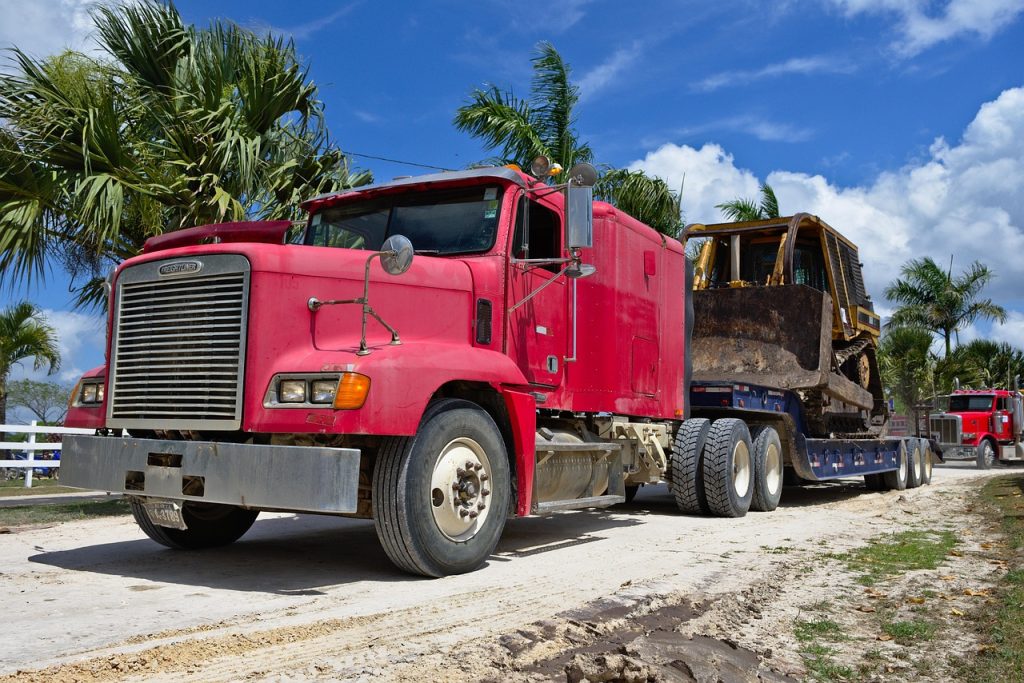
Driving down the highway, we have all seen them: massive trucks flanked by pilot cars with flashing amber lights, carrying wind turbine blades, industrial generators, or entire modular homes. This is the world of heavy haul logistics, a specialized sector of the transport industry where precision engineering meets the open road. Standard shipping is about efficiency and speed. Heavy haul, however, is about feasibility and safety. When cargo exceeds standard legal dimensions or weight limits, it enters the realm of “oversized” or “super loads.” Here is everything you need to know about the complex machinery and planning behind heavy haul logistics.
What Qualifies as Heavy Haul ?
In the United States, standard freight usually maxes out at 80,000 pounds (gross vehicle weight), with a width of 8.5 feet, a height of 13.5 to 14 feet, and a length of 48 to 53 feet. Anything exceeding these parameters is considered an oversized load.
However, heavy haul isn’t just about being “big.” It involves loads that cannot be broken down into smaller shipments. You cannot cut a bridge beam in half or dismantle a massive pressure vessel just to fit it on a standard flatbed. This necessitates specialized trailers and permits.
The Critical Role of Pre-Planning
The actual driving is only about 20% of the job in heavy haul logistics. The other 80% is planning. Unlike a standard UPS delivery, a heavy haul truck cannot simply follow GPS.
Route Surveys: Before a wheel turns, a route survey is conducted. Logistics providers must physically drive the proposed route to check for low bridges, tight turns that the trailer can’t navigate, and weak infrastructure.
Permitting: This is the biggest bureaucratic hurdle. Every state, and sometimes every county or municipality, has different rules regarding oversized loads. A load moving from Texas to North Dakota requires permits for every jurisdiction it crosses. Some states restrict travel to daylight hours; others ban travel on weekends or holidays.
Specialized Equipment
You cannot put a 150,000-pound transformer on a standard trailer; the tires would burst and the frame would snap. Heavy haul utilizes engineering marvels to distribute weight.
- Lowboys (RGNs): Removable Gooseneck trailers sit very low to the ground (sometimes inches), allowing for taller cargo to clear overpasses.
- Multi-Axle Trailers: To comply with “weight per axle” laws (which protect road surfaces), heavy haulers add more axles. You might see trailers with 10, 13, or even 19 axles spreading the weight.
- Schnabel Cars: Used specifically for wind towers, these trailers use the cargo itself as part of the trailer frame to reduce height.
- SPMTs: For the heaviest loads (like oil rig components), Self-Propelled Modular Transporters are used. These are computer-controlled platforms with dozens of wheels that can move in any direction.
Escorts and Pilot Cars
Safety is the priority. This is where pilot cars come in.
- High-Pole Cars: These drive ahead of the load with a measuring stick attached to the bumper. If the stick hits a bridge or wire, the car radios the truck immediately to stop.
- Rear Escorts: These prevent traffic from trying to pass the truck in dangerous areas and help the driver navigate lane changes.
- Police Escorts: For “super loads” (often over 200,000 pounds or taking up two lanes), police escorts are often mandatory to close intersections and manage traffic flow.
The Challenges of the Road
Heavy haul drivers are the elite of the trucking world. They must manage momentum and braking distances that are vastly different from standard trucks. They also face unique challenges:
- Infrastructure: A bridge might hold the weight, but is the on-ramp wide enough for the turn? Drivers often have to “counter-steer” trailers remotely to navigate corners.
- Weather: High winds are dangerous for large surface-area loads like tanks or blades.
- Utility Obstructions: Sometimes, power lines must be physically lifted by utility crews to let a load pass underneath.
Heavy haul logistics is the invisible force building our modern world. Without it, we wouldn’t have wind farms, major bridges, or factory infrastructure. It is a high-stakes ballet of physics, bureaucracy, and skilled driving. Next time you see a “WIDE LOAD” banner approaching, give them plenty of space—you are witnessing a feat of engineering rolling right past your window.