
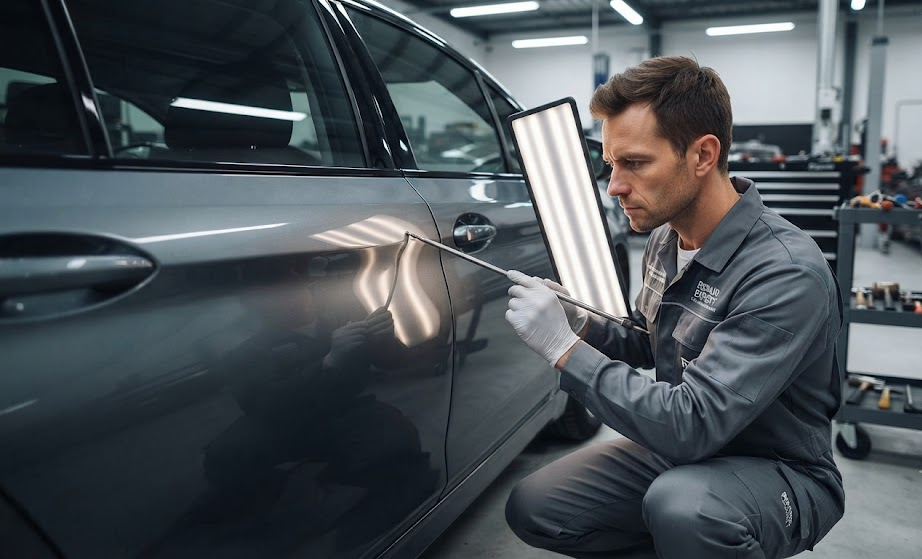
In an age where car aesthetics play a significant role in maintaining vehicle value, modern techniques for automotive dent repair have emerged as a game-changer. Gone are the days of time-consuming and invasive repairs that often involved extensive bodywork. Today, processes like paintless dent repair (PDR) not only save time but also preserve the integrity of a vehicle’s original finish, offering substantial benefits for both car owners and repair professionals.
Understanding Paintless Dent Repair (PDR)
Paintless dent repair has revolutionized how minor dents are addressed in the automotive industry. This specialized technique focuses on restoring the vehicle’s original shape without the need for repainting or excessive bodywork.
How PDR Works
The essence of PDR lies in the use of specialized tools that gently access the backside of the dent and massage it back into shape. Technicians employ rods, hooks, and suction cups to achieve this delicate maneuver. Such precision necessitates skilled technicians capable of working meticulously to ensure minimal impact on surrounding paint and body panels.
A primary advantage of PDR is its speed; most minor dent repairs can be completed in just a few hours. This efficiency greatly reduces downtime for vehicle owners, allowing them to return to the road swiftly.
Additionally, PDR preserves the car’s original paint job, a significant factor for resale value. Unlike traditional methods that may involve sanding and repainting—risking color mismatches and imperfections—PDR ensures that the vehicle retains its factory finish.
Exploring Advanced Dent Repair Technologies
The automotive repair landscape has seen tremendous advancements thanks to modern technology. These innovations not only enhance repair quality but also streamline processes for technicians.
Emergence of Robotic Systems
One notable advancement in dent repair technology is the integration of robotic arms into the process. These robotic systems can perform complex dent removal tasks with unparalleled accuracy. Equipped with specialized tools and sensors, they navigate the vehicle’s contours, minimizing the risk of damaging the paint.
Utilizing Digital Imaging
Digital imaging technologies, such as 3D scanning, allow technicians to create detailed models of damaged areas. This technology aids in understanding the dent’s shape, size, and depth, ensuring an effective repair process.
Incorporating computer-aided design (CAD) software further enhances repair strategies by enabling technicians to simulate the process, helping them select the most appropriate techniques and tools for each job.
The Benefits of Modern Techniques in Dent Repair
The benefits associated with these modern dent repair technologies extend beyond mere efficiency; they create a more positive experience for car owners.
- Preservation of Original Finish: Maintaining the vehicle’s factory paint retains aesthetic appeal and market value, key considerations for owners.
- Increased Speed: Many repairs that once took days can now be completed in hours, significantly alleviating inconvenience for vehicle owners.
- Cost-Effective Solutions: The non-invasive nature of methods like PDR eliminates the need for costly materials such as paint and fillers, reducing overall repair costs.
- Enhanced Precision: Advanced tools and imaging technologies allow for highly accurate repairs, blending the repaired area seamlessly with the rest of the car.
- Environmental Impact: With fewer materials and chemicals involved, modern dent repair techniques are far less damaging to the environment, catering to eco-conscious consumers.
Why Choose Contemporary Methods Over Traditional Techniques?
While traditional dent repair methods relied heavily on extensive bodywork and repainting, such practices are increasingly seen as outdated. The comparison highlights several stark differences that favor modern techniques, particularly PDR.
Traditional Methods Explained
Traditional dent repair often involved sanding, applying body fillers, and repainting. This process not only required more time but also posed the risk of mismatched paint and an overall inconsistent finish.
Modern Approaches Outshine
Alternatives like PDR, on the other hand, provide a less invasive option that focuses on restoring the vehicle’s original state rather than altering it. This is particularly noteworthy for minor dents caused by dings, hail, or light collisions, where traditional methods may be unnecessarily complicated.
Moreover, as technology progresses, automated machines for dent repair are emerging, allowing for consistency and precision that manual techniques might not achieve. The future of automotive dent repair points toward greater autonomy, enhanced efficiency, and an overall increase in customer satisfaction.
Integrating Technology in Automotive Repair Services
The influence of technology continues to shape the automotive repair service landscape. Service providers now leverage digital tools to enhance transparency and efficiency in repairing dent damage.
Mobile Applications for Convenience
Many repair shops now feature mobile apps that enable customers to schedule repairs conveniently. These apps provide real-time updates on repair progress, fostering transparency and trust between customers and service providers.
Precision Tools Revolutionizing Maintenance
Advanced tools such as high-resolution imaging systems help technicians spot the smallest imperfections, ensuring thorough repairs without compromising the vehicle’s integrity. Such innovations not only improve repair quality but also contribute to higher customer satisfaction and trust in repair services.
The evolution of car dent repair technologies marks a significant milestone in the automotive industry, embracing a future that promises faster, cost-effective, and high-quality repairs. For vehicle owners looking to maintain the integrity and value of their cars, modern techniques like paintless dent repair provide an unparalleled solution. To delve deeper into panel beating methods, consider checking out this essential guide outlining everything you need to know about contemporary automotive repair practices.
As the automotive industry continues to innovate, the landscape of dent repair is poised to evolve even further, bringing with it promising solutions that cater to both efficiency and quality.

