In the evolving landscape of automotive technology, a vehicle’s electrical system is paramount for its efficiency and safety. From the moment you turn the key to ignite your engine to the flicker of headlights illuminating the road, these systems play an essential role. Understanding the intricacies of car lighting and electrical repairs can make a world of difference, empowering drivers to tackle issues head-on without the stress of costly mechanic visits.
Understanding Car Electrical Systems
The electrical systems in modern vehicles are intricate and multifaceted, comprising various components that work harmoniously. The heart of any automotive electrical system is its battery, which provides the initial kick of power needed to start the engine. Following closely is the alternator, responsible for generating electrical energy while the vehicle operates. This information is crucial to consider when diagnosing potential failures.
Key Components of Your Vehicle’s Electrical System
To appreciate how to maintain and repair these systems, one should familiarize themselves with the major components:
- Battery: Supplies power to start the engine and enables electronic systems when the engine is off.
- Alternator: Recharges the battery and powers electrical systems while the engine runs.
- Starter Motor: Converts electrical energy into mechanical energy to start the engine.
- Fuses and Relays: Protect circuits from power surges and control high-current systems.
- Wiring Harness: A complex network connecting all electrical components.
- Control Modules: Manage various vehicle functionalities via electronic signals.
Troubleshooting Common Electrical Issues
Addressing electrical malfunctions requires a structured approach. Start by conducting a visual inspection to pinpoint immediate issues.
Steps for Effective Troubleshooting
A methodical investigation can reveal the root of the problem:
- Visual Inspection: Look for loose connections, corrosion, or damaged wires.
- Testing Tools: Utilize a digital multimeter to measure voltage and continuity.
- Observing Symptoms: Check for dimming lights, unexpected clicking sounds, or dashboard warnings.
When to Seek Professional Help
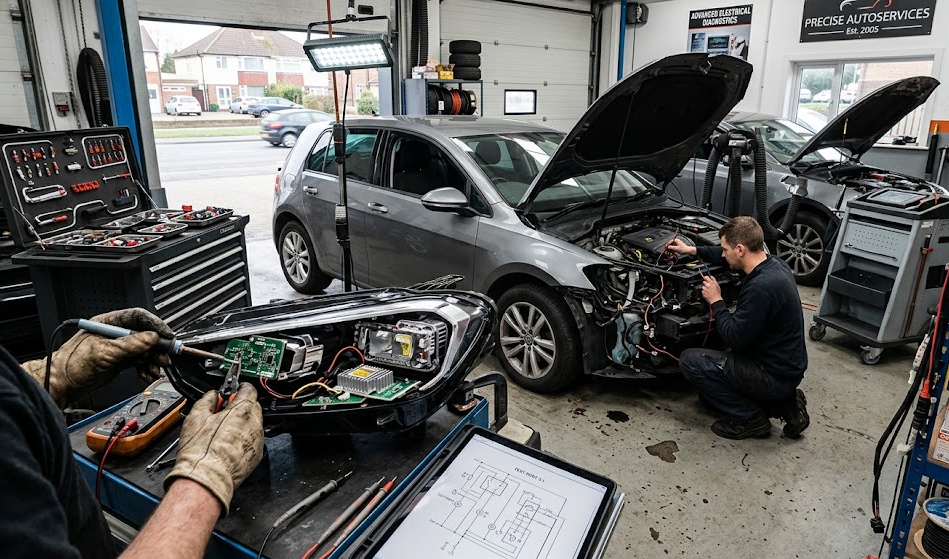
Some problems are straightforward DIY fixes, while others demand professional expertise. Battery replacements and simple fuse changes can often be handled at home. However, for complex repairs like an alternator service or electrical diagnostics, contacting a professional is advisable. Companies provide specialized services for intricate automotive issues.
Essential Tools for Car Electrical Repair
Equipping yourself with the right tools can streamline the repair process and improve safety. Here are the essentials you should consider gathering:
- Digital Multimeter: Vital for testing voltage and continuity.
- Wire Strippers and Crimpers: Useful for repairing connections.
- Fuse Puller: A handy tool when replacing fuses.
- Insulated Tools: Protect against electrical shock.
- Heat-Shrink Tubing: Provides secure insulation for connections.
Conducting Headlight and Tail Light Repairs
Among the most common repairs are those related to lighting systems, which ensure visibility and safety during nighttime driving. Regular maintenance and timely replacements can prevent traffic accidents.
Headlight Restoration Steps
Restoring headlights can enhance their brightness and improve night visibility:
- Clean the surface with soap and water to remove grime.
- Use a headlight restoration kit or a DIY mixture of baking soda and vinegar.
- Apply a UV sealant to protect against future fading.
Tail Light Replacement Procedures
Ensuring your tail lights are operational is vital for signaling intentions to other drivers:
- Check the vehicle’s manual for access instructions to the tail light assembly.
- Disconnect any wiring harness before removing the old light bulb.
- Replace with a new bulb, ensuring a snug fit and reattach the wiring.
LED Conversion for Improved Efficiency
Switching to LED lighting not only brightens your vehicle but also enhances energy efficiency. LED lights consume less power and last longer than traditional bulbs.
Benefits of LED Lighting
LED conversion has several advantages:
- Energy Efficiency: Significantly reduces power consumption.
- Longevity: LEDs typically last up to 25,000 hours.
- Brightness: Provides better illumination compared to standard bulbs.
Embracing Preventive Maintenance
To ensure longevity and reliability in your vehicle’s electrical system, preventive maintenance is key. Regular check-ups can save time and money in the long run.
Routine Maintenance Tips
Here are some crucial steps to keep your electrical system functioning smoothly:
- Periodically test the battery health to avoid unexpected failures.
- Inspect fuses for any signs of wear and replace when necessary.
- Monitor wiring connections for signs of corrosion and repair as needed.
Understanding Your Vehicle’s Unique Needs
Finally, every vehicle has unique specifications and requirements. Familiarize yourself with your specific make and model to effectively address its electrical components. Consulting resources like specialized guides can further enhance your understanding.