
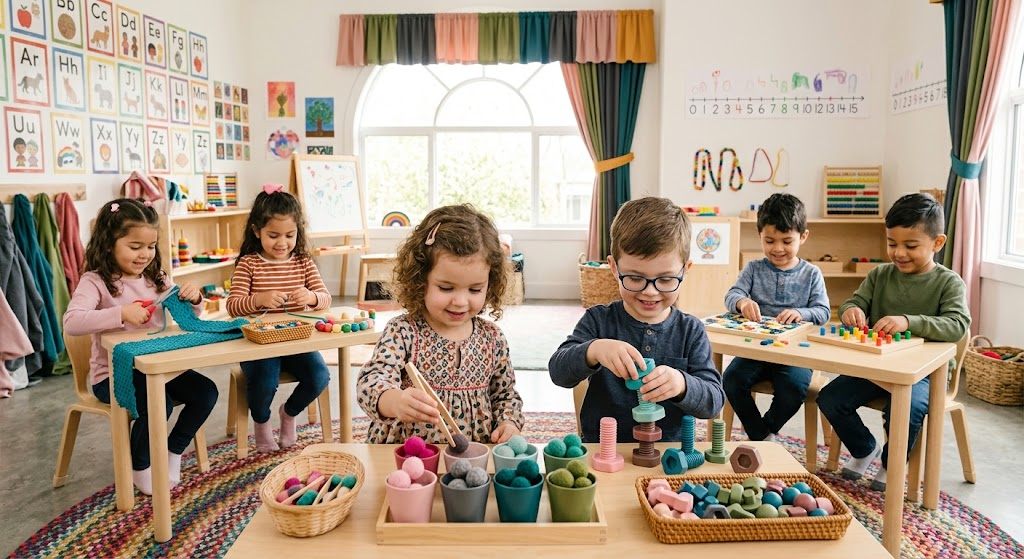
Fine motor activities help preschool children develop the small muscle movements needed to handle everyday objects, manipulate classroom materials and gain independence. Through drawing, building, sorting and other hands-on experiences, children can improve hand-eye coordination, finger control and dexterity. Choosing age-appropriate activities that encourage exploration can support these skills while keeping learning enjoyable. 🧩
Fine Motor Skills in Early Childhood Development 🖐️
Fine motor skills involve the coordinated movements of the hands, fingers and wrists. Preschool children use these abilities when holding crayons, turning pages, fastening clothing, using utensils and handling small objects. These movements also contribute to early writing, creative expression and participation in classroom routines.
Development occurs at different rates, so activities should accommodate individual abilities rather than follow a rigid timetable. Providing varied materials and opportunities to practise allows children to build confidence without unnecessary pressure.
Hand-Eye Coordination Activities 👀
Hand-eye coordination helps children guide their hands using visual information. Activities such as placing objects into containers, completing simple puzzles and stacking blocks encourage children to judge distances, adjust movements and control where objects are positioned.
Bead threading with large, age-appropriate beads and thick laces can also support coordination. Children can practise guiding each bead onto the lace, progressing at their own pace as their accuracy improves.
Finger Strength and Dexterity Exercises 💪
Finger strength supports tasks such as holding pencils, manipulating fasteners and using classroom tools. Playdough, soft modelling materials and child-safe dough cutters provide opportunities to squeeze, roll, pinch and shape materials using different finger movements.
Clothespin activities can offer another way to practise controlled gripping, provided the clips are suitable for the child’s age and are used under supervision. These experiences develop hand control through play rather than repetitive drills.
Creative Fine Motor Activities for Preschool Children ✂️
Creative activities combine skill development with opportunities for imagination and self-expression. They allow children to experiment with materials while practising movements that require precision and coordination.
Drawing, Coloring and Painting 🖍️
Drawing and coloring encourage children to control writing tools, adjust pressure and coordinate small movements. Thick crayons, washable markers and short pencils can be easier for some preschoolers to manage than narrow tools.
Painting with large brushes, stamps or child-safe sponges introduces different grips and movements. Children can make lines, dots and patterns without needing to stay within strict outlines. The emphasis should remain on exploration and participation rather than producing a perfect picture.
Cutting, Tearing and Paper Crafts 📄
Tearing paper into pieces, placing shapes on a page and folding paper along simple lines help children practise bilateral coordination, which involves using both hands together. These activities can prepare children for more complex classroom tasks.
With close adult supervision, children who are developmentally ready can use age-appropriate safety scissors to cut paper strips or follow simple shapes. Adults should demonstrate safe handling and provide assistance whenever necessary.
Practical Fine Motor Activities for Daily Routines 🧺
Everyday routines offer useful opportunities to practise hand movements in meaningful contexts. These experiences can help children understand how fine motor skills support independence at home and in preschool.
Sorting, Building and Manipulating Objects 🧱
Sorting large counters, arranging blocks, fitting simple construction pieces together and matching objects by shape encourage controlled finger movements. Stacking and connecting materials also help children adjust their grip and coordinate both hands.
Activities should use pieces that are large enough to reduce choking risks. Small beads, buttons and similar objects are unsuitable for children who may put materials in their mouths and require careful supervision.
Dressing and Self-Care Practice 👕
Practising with large buttons, zippers, simple fasteners and easy-to-manage clothing can help preschool children develop the hand movements needed for dressing. Opening containers, turning pages and using child-sized utensils during meals provide additional opportunities to build dexterity.
Allowing sufficient time for children to attempt tasks independently encourages persistence. Adults can demonstrate a movement, offer limited assistance and gradually reduce support as the child becomes more comfortable.
Choosing Age-Appropriate Fine Motor Activities 📋
The most suitable activities reflect each child’s abilities, interests and safety needs. Some children may enjoy detailed puzzles, while others benefit more from larger objects and simple grasping exercises. Adjusting the difficulty can keep activities engaging without making them frustrating.
Consider these points when planning fine motor experiences:
-
Safety: Choose non-toxic, age-appropriate materials and supervise activities involving tools or small objects.
-
Variety: Combine creative play, construction, sorting and everyday self-care tasks.
-
Accessibility: Offer different sizes, textures and levels of difficulty to accommodate individual needs.
-
Progress: Observe how children handle materials and adapt activities as their coordination develops.
Short, enjoyable sessions can be more effective than activities that demand prolonged concentration. Repeating familiar tasks while gradually introducing new challenges gives children opportunities to practise without making play feel like a test.
Preschool educators, childcare professionals and early childhood development specialists can help select appropriate activities and adapt them to children’s needs. With safe materials, patient guidance and regular opportunities to explore, fine motor practice can become a natural and enjoyable part of children’s daily routines. 👩🏫✨


