
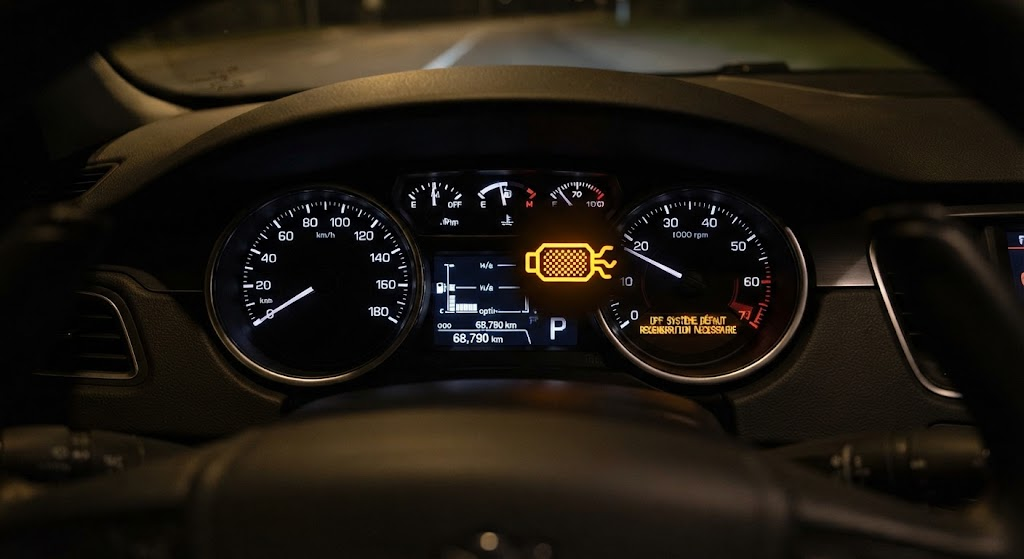
From illuminated dashboard lights to unexpected drops in engine power, the signs of a blocked DPF can often be subtle at first but escalate quickly if ignored. Many drivers find themselves caught off guard, grappling with sudden breakdowns or costly fixes due to a lack of awareness. This article delves into the warning signs of a compromised DPF, offering insights into proactive measures that every diesel driver should heed.
Identify the DPF Warning Light Early
The first indication that something is amiss often comes in the form of an illuminated dashboard light. This amber warning light, usually resembling a filter with dots inside, signals that the DPF has accumulated soot and is struggling to perform its function. If this warning light activates, it is essential to take action immediately. Driving your vehicle at higher speeds for about 30 minutes can occasionally help put the filter into a regeneration cycle, thus burning off trapped soot. However, if the light persists despite attempts to generate heat through driving, professional cleaning may be necessary.
Experience Noticeable Engine Power Loss
Another common symptom drivers might encounter is a significant drop in engine power. A blocked DPF leads to elevated backpressure, making it harder for the engine to expel exhaust gases. Consequently, you may experience a sluggish acceleration, limited throttle response, or difficulty climbing steep inclines. This decrease in performance can exacerbate over time, aligning with the increasing severity of the blockage.
Understand the Risks of Limp Mode
When the DPF becomes heavily clogged, many cars enter what’s known as limp mode. This automated safety feature limits the vehicle’s speed to protect the engine from damage. While this mode allows you to drive the car in emergencies, it’s essential to seek immediate service to address the underlying issue. Continuing to drive in this compromised state can lead to more severe, and possibly expensive, mechanical problems.
Recognize Warning Signs Through Exhaust Smoke
Black smoke billowing from the tailpipe is an unmistakable warning that should never be ignored. Under normal conditions, modern diesel engines produce minimal visible exhaust. If you notice excessive black smoke, this indicates that the DPF is overwhelmed and can no longer filter out soot effectively. While black smoke can be indicative of several issues, including bad injectors, it’s crucial to explore DPF problems as a possible cause.
Acknowledge Deteriorating Fuel Economy
A blocked DPF could also be affecting your fuel efficiency. As the exhaust system becomes restricted, the engine has to exert more effort to maintain performance, leading to decreased fuel economy. If you suddenly find yourself refueling more frequently without changes to your driving habits, this may very well signal that your DPF is in distress.
Detect Diesel Fumes Inside the Cabin
Pay attention to any unusual smells that may indicate issues with your vehicle’s exhaust system. If you notice an unburned diesel odor inside the cabin, it may signify an unsuccessful regeneration cycle or an exhaust leak, which can be harmful. This scenario demands immediate inspection to prevent further complications.
Monitor Engine Temperature and Start-Stop Systems
Engine overheating is another concern linked to a blocked DPF. Restricted exhaust flow retains heat within the engine compartment, causing the temperature gauge to rise dangerously high. This situation can lead to severe engine damage if left unaddressed. Additionally, if your vehicle’s start-stop system ceases functioning, it likely indicates that the vehicle is trying to maintain adequate exhaust temperatures for regeneration. If this feature turns off frequently, it’s time for an inspection.
Recognize Critical Starting Issues
The most severe symptom of a blocked DPF occurs when the engine struggles to start or stalls shortly after cranking. If the filter is entirely obstructed, exhaust gases won’t escape, and airflow into the engine will be severely limited. This scenario not only prevents the engine from running efficiently but may necessitate immediate towing to a mechanic for cleaning or replacement.
Assessing the Severity of DPF Blockage
Identifying the severity of the blockage is vital. Assess your situation using a three-stage ladder: Stage 1 indicates a partially blocked filter with an amber light and minor power loss; Stage 2 shows a mostly blocked filter with persistent warning lights and limp mode; Stage 3 signifies a fully blocked filter where the engine won’t start. Knowing which stage you’re in can guide your next steps effectively.
Understand Safe Driving Practices with a Blocked DPF
Understanding the safety of driving with a blocked DPF is crucial. In Stage 1, you may drive gently to perform a highway drive. Stage 2 allows slow, careful driving to a local shop, while Stage 3 calls for towing the vehicle to avoid potential engine damage. Awareness and immediate action can save you from further complications.
Explore Common Causes of DPF Blockage
Most DPF blockages result from driver behavior and vehicle maintenance. Frequent short trips may prevent the DPF from heating sufficiently, thus failing to burn off soot effectively. Using the wrong oil can lead to excessive ash buildup, while poorly functioning injectors may increase soot production. Other contributing factors include turbo leaks and infrequent servicing that exacerbates issues.
Plan for Professional Assistance
Ignoring early warning signs can transform what could have been a simple cleaning into a costly replacement. On average, costs for DPF services can range significantly, from forced regeneration to complete filter replacement. Avoiding the spiraling expenses of neglect relies on regular vehicle maintenance and prompt attention to warnings.